Where We Take People
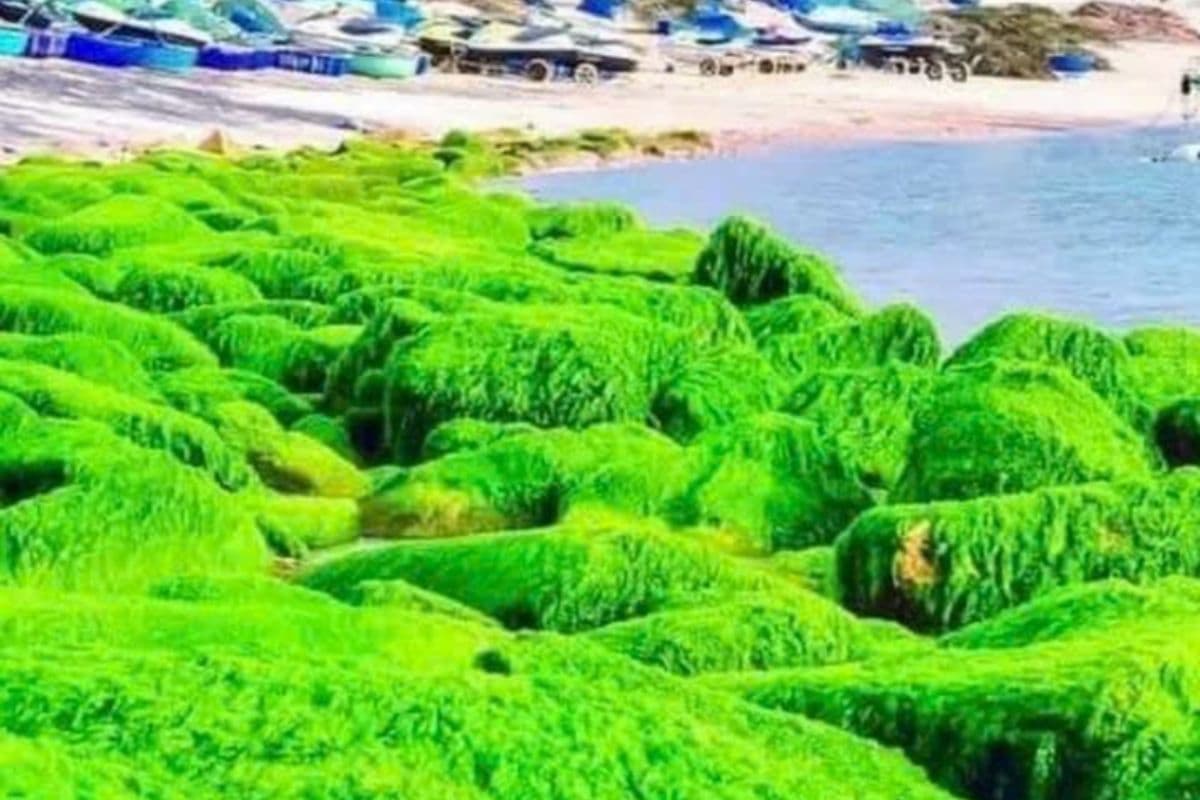
Every tour we run departs from Quy Nhon and stays in Binh Dinh. These are the places behind them — Champa brick towers, the Tay Son heartland, craft villages, a lagoon and a stretch of coast.
 Heritage
Quang Trung Museum
Bảo tàng Quang Trung
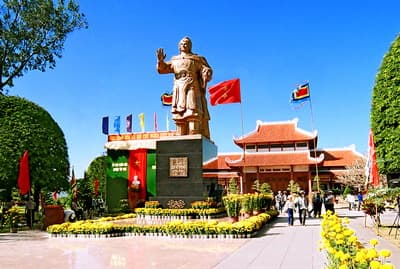
The Quang Trung Museum stands at Kien My in Tay Son district, about 45 km inland from Quy Nhon, on the ground where the three Tay Son brothers were born. Built between 1977 and 1979, it holds the weapons, documents and relics of the peasant uprising that ended with Nguyen Hue crowned as Emperor Quang Trung — and, in the hall beside it, the martial arts and battle drums that came out of the same villages.
 Heritage
Cham Towers
Tháp Chăm Bình Định
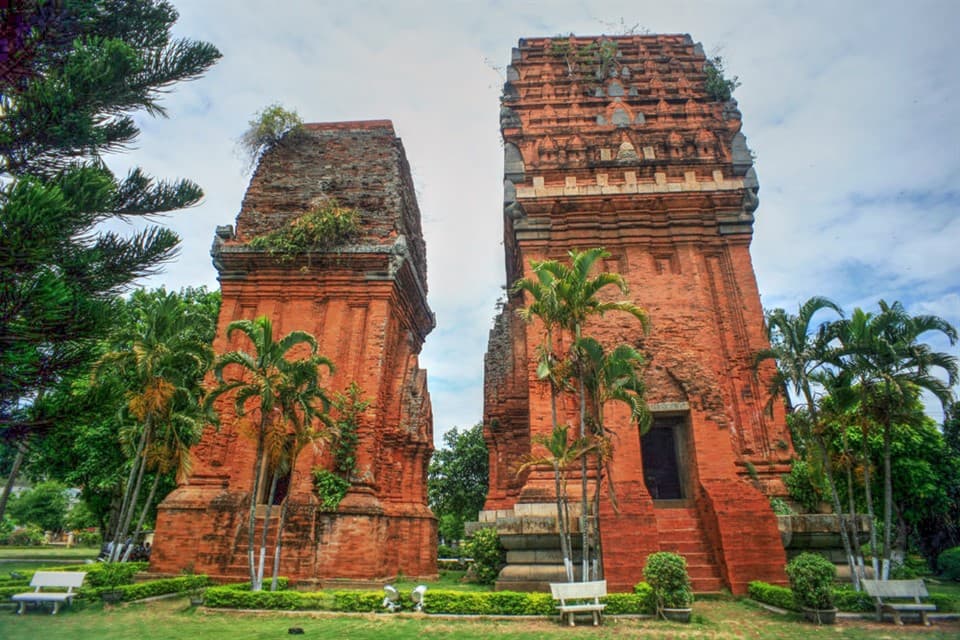
Binh Dinh holds the densest surviving group of Cham brick towers in Vietnam, left from the five centuries when Vijaya was the capital of Champa. They run from the Twin Towers, which now stand in a residential street in Quy Nhon, to Duong Long out among the sugarcane in Tay Son, whose central tower is the tallest brick tower in South-East Asia at close to 40 metres.
 Heritage
An Nhon
An Nhơn
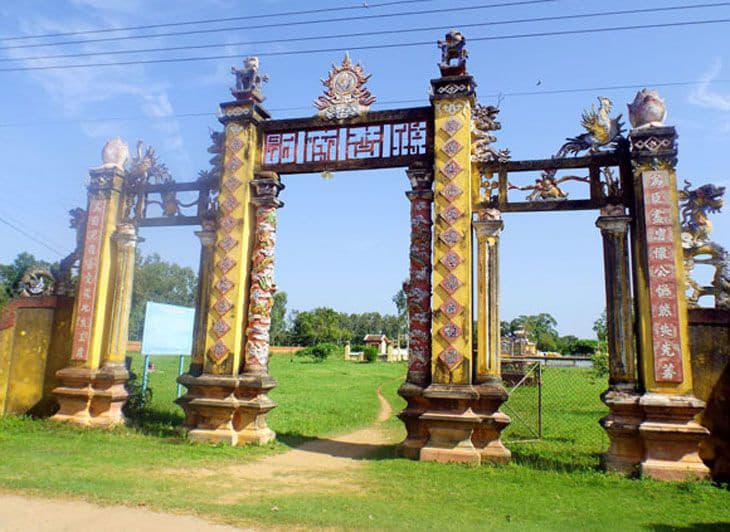
An Nhon lies about 20 km north-west of Quy Nhon on the old inland road, on ground that has been a capital twice over. Vijaya — Do Ban to the Vietnamese — was the seat of Champa from 999 until 1471, and the Tay Son brothers later raised their Hoang De citadel inside the same walls. What is left above ground is fragmentary: gateways, stone elephants and lions, a moat line running under the rice, and the Canh Tien tower alone on its mound.
 Nature & Wetlands
Thi Nai Lagoon
Đầm Thị Nại
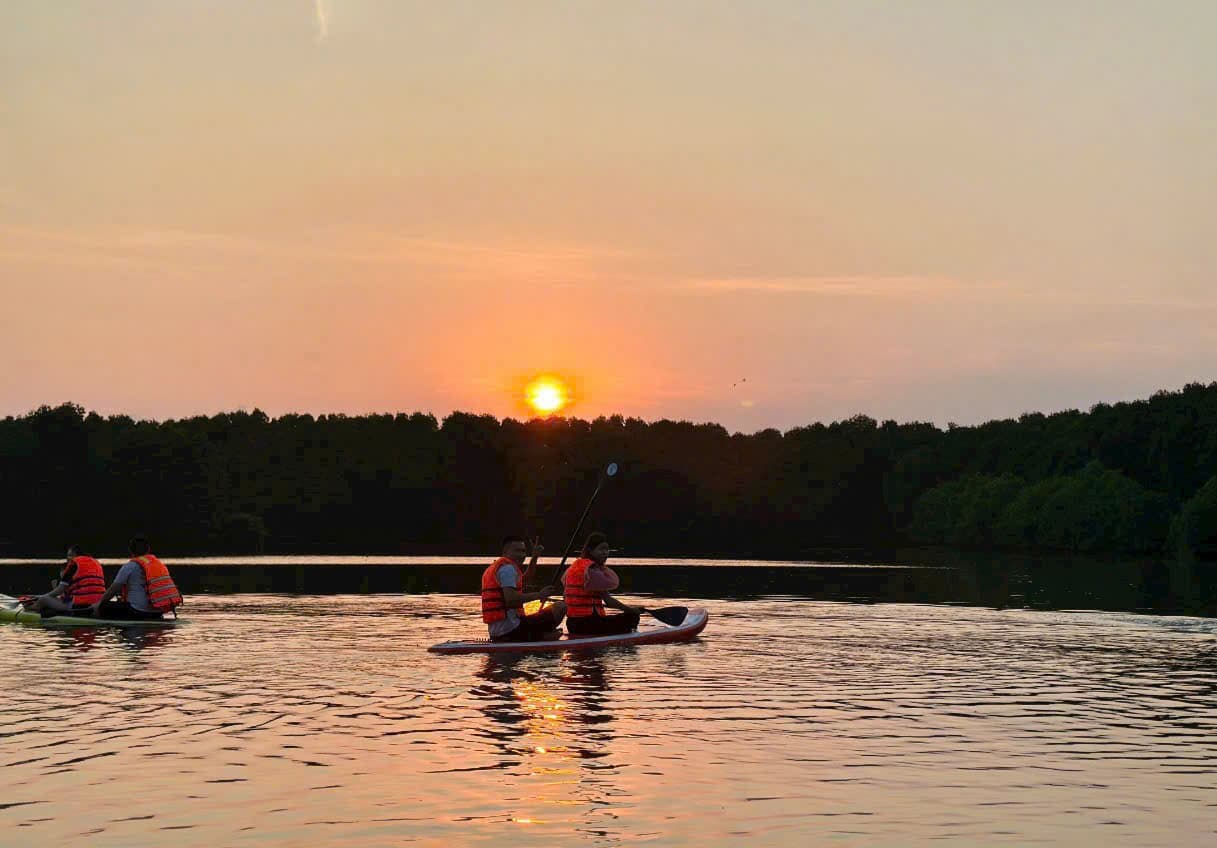
Thi Nai is the largest lagoon in central Vietnam — roughly 5,000 hectares of brackish water held between Quy Nhon and the Phuong Mai peninsula, fed by the Kon and Ha Thanh rivers. Champa used it as the port of Vijaya and it has been fought over ever since; today it is fish pens, cast-net fishermen working from flat boats, and the mangrove islet of Con Chim in the middle.
 Heritage
Lang Song Church
Nhà thờ Làng Sông
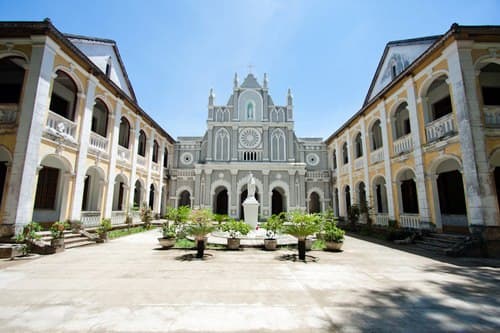
Lang Song — the Lang Song minor seminary — sits in a walled compound out in the rice fields of Tuy Phuoc, about 20 km from Quy Nhon. A seminary has stood on the site since the 1840s; the Gothic church and the two-storey colonnaded wings that enclose its courtyard are the early twentieth-century rebuild, ringed by old sao trees planted along the walls.
 Coast & Islands
Eo Gio
Eo Gió
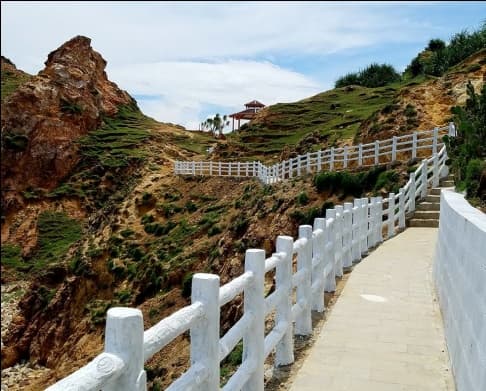
Eo Gio is a wind gap on the Phuong Mai peninsula at Nhon Ly, about 20 km north-east of Quy Nhon, where two arms of rock curve around a cove of clear water. A stepped walkway with white railings runs along the cliff at mid-height above the sea, and the wind that gives the place its name — the wind strait — comes through the gap most of the year.